



Postmillennial Ink-Stained Wretch

Who

A magazine editor, ghostwriter, and literary gun-for-hire living in NYC, Nick Kolakowski specializes in writing about gizmos, travel, business, liquor, cigars, celebrity, and various other things wiser heads would tell you to stay away from.

more

Where

Search


No Exit from Vegas

By Nick | January 15, 2012

I first traveled to Vegas four years ago, to interview celebrity chef Bobby Flay for a now-defunct magazine. Most of that trip was spent in the bustling kitchen at his Mesa Grill in Caesar’s Palace, jotting down quotes and local color, wary of stepping in the wrong direction lest some irate sous-chef decide to slam a blade through my writing hand. I never saw Vegas proper, save for the few minutes it took to walk from cab to restaurant and back.

I’ve returned several times in the intervening years, though, and always for work. Everything about it creeped me out, on a fundamental level, and it took a few miles’ worth of walking casino floors and the Strip to puzzle out the root cause: for a city ostensibly built to entertain, nobody looks happy. Not the senior citizens milking a cigarette, a cup of vodka, and a penny-slot machine; not the people packing the games tables; not the people exiting the shows. They’re all grim as cogs in a neon machine.

What the advertisements would like you to believe is a citywide party (“What happens in Vegas, stays in Vegas”) instead feels like some massive social experiment designed by Jean-Paul Sartre in a crappy mood. Fortunately, this year’s Consumer Electronics Show was busy enough to keep me in the Las Vegas Convention Center roughly 12 hours a day.

Anyway, New Year: a very short and positive review for my very short fiction story published in late 2011 in Satellite magazine

…new eWeek pieces

…a custom-publishing project I co-authored for Graycliff (a boutique hotel in the Bahamas) finally sees the light of day…

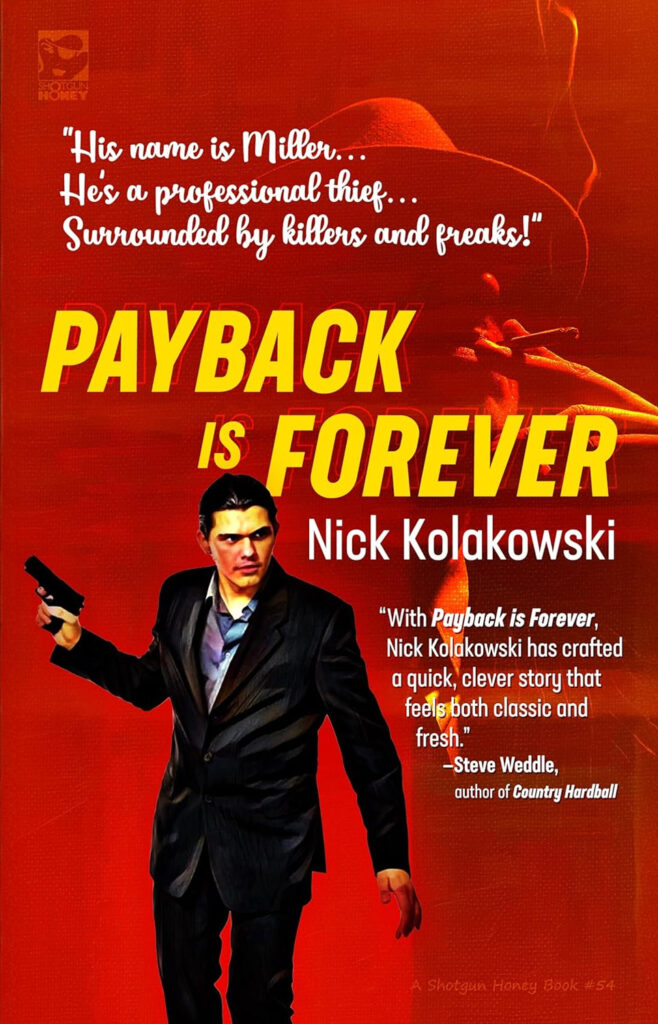
…and (gratuitous plug alert), my upcoming book has a finished cover—you can take a look over at Amazon or Barnes & Noble.

Topics: Uncategorized | No Comments »

The Twenty-Thousand Dollar Espresso

By Nick | December 4, 2011

Not so long ago, I specialized in writing about luxury paraphernalia: the watches, private jets, high-end alcohol, and cars that act as signifiers of extreme wealth. The irony being that, while midlevel Wall Street executives and junior corporate vice presidents leveraged their credit to the maximum in order to purchase that newest and shiniest Piaget or Bugatti Veyron, many of the truly wealthy people I encountered—the multi-hundred-millionaires, the billionaires, the one percent’s one percent—seemed to prefer more understated accoutrements: the sport watch in place of the diamond-crusted timepiece, the decent but decidedly un-flashy suit.

But I digress. When it came to writing about high-end goods and services, the first and biggest trap was succumbing to the Curse of the Inflatable Adjective: the urge to staple a hyperbolic “fantastic” or “exemplary” in front of a particular brand name, and call it a day. That fails on two counts: first, because such terms fail to explain why that particular object deserves that description, and second, because… well, hyperbole belongs in press releases, not articles.

Which, of course, brings me to the subject of coffee.

This afternoon I went to a little café named Sweetleaf, in Queens. The establishment’s current claim to fame is the La Marzocco Strada espresso machine tucked behind the counter. If you subscribe to the hype, to compare the Strada to your typical restaurant espresso-maker is to equate the Bugatti Veyron, once the world’s fastest production vehicle (and certainly one of the most coveted), with a rusty VW bug.

In the name of crafting the supposedly ideal espresso, the Strada’s sleek steel body offers individual coffee boilers, a means to electronically control brewing temperature, a paddle that helps regulate something called “progressive pre-infusion,” and a bevy of other high-end features. If you believe the reports, the whole package costs around twenty thousand dollars.

Now, I’m not an expert in the sticker prices for various pieces of restaurant equipment, but twenty thousand dollars sounds like a lot of money for a relatively small piece of hardware whose primary function centers on quick and steady output of coffee, no matter how wonderful the actual result. But all such things deserve their day in court.

I sat in one of Sweetleaf’s brown leather chairs and gazed through the plate-glass window at traffic rumbling its merry way toward the bridge, and sipped my three-dollar espresso from its little blue cup.

Some ostensibly quality products, in reality, are little better than their cheaper equivalents; I let the liquid coat my tongue at a slower pace, rather than slugging the whole cupful back, in order to better judge whether the Strada produced something of better quality than your typical restaurant caffeine-shot.

It seemed there were two flavor notes at work: a tangy bite, afloat within something smooth and sleek. I tried describing it aloud. I suddenly sympathized for writers whose jobs involve describing subtleties wine or perfume. Tangy, but there’s another taste, too. Way to be articulate, there. In a certain way, though, taste is like pain; too soon, you run out of words that adequately describe it.

I bussed my cup in the bin by the counter. The barista looked up: “What did you think?”

“It’s like I was tasting two things. It wasn’t like your typical espresso shot, where you just sort of get that zing,” I said. “But that zing was sort of floating in this other taste, like an emulsion?”

In my defense, my espresso-fueled blood was already pounding through my heart at record speed, my words tumbling out slightly faster than thought. Yet the barista started nodding: “There is that bitterness. And that other thing.”

Fantastic, I almost said, and stopped. The hardest part always comes with trying to describe things as they really are. But sometimes the words run out.

Topics: Uncategorized | No Comments »

Tools Are Handy

By Nick | November 15, 2011

Once upon a recent midnight dreary, as I plopped on the couch for a viewing of John Carpenter’s horror opus The Thing, there suddenly came a tapping—no, more like a furious knocking—at my apartment door. I opened it to find my next-door neighbor, in a state of profound agitation, asking if I knew anything about door locks.

I offered that, yes, I knew a little. For the first time I noted the wordless cries of anger emanating from somewhere in the building, sounding very much like a tribe of chimpanzees infuriated by a particularly annoying puzzle. My neighbor escorted me to the building’s front vestibule, where a few of my fellow residents had gathered around the front door. Someone had broken off a key in the lock. The fragment jammed in the mechanism was frustrating all attempts to pull it free with their fingers. Terror and chaos reigned.

“Hold on,” I said, and returned upstairs, where I fetched a pair of pliers from my toolkit. Thirty seconds later I had the offending bit of key freed from its prison, along with the eternal gratitude of my neighbors.

Sooner or later, tools (and the ability to use them) come in handy.

On a totally unrelated note, the one and only Lost magazine (which published some personal essays of mine over the past two years, including this one about the global economic collapse) will produce its last issue in the next few weeks. It will be missed.

Topics: Uncategorized | No Comments »

Fresh Clips

By Nick | October 18, 2011

On eWeek: A much more formal piece on the Japan trip, focusing on how the earthquake affected the country’s technology industry.

On Amazon.com and Barnes & Noble: For those who like to plan far ahead (and by “far,” I mean you’re the type who buys birthday presents for people ten months in advance), my new book, “How to Become an Intellectual,” is now available for pre-order. The release date is April 15.

The book itself is a tongue-in-cheek guide to the intellectual lifestyle, broken down into 100 chapters: topics of enlightenment include everything from reciting Romantic-era poetry on cue, to knowing how to play at least one classical instrument, to fighting “idea wars” honorably and well. Along the way, the discussion veers into decidedly esoteric territory: how beer is responsible for civilization, for example, and ways to recreate the infamous Vidal-Mailer brawl in your living room.

Topics: Uncategorized | No Comments »

Tokyo

By Nick | October 11, 2011

So then I went to Japan.

Drained and sore from the fourteen-hour nonstop flight in coach, I rooted out the bank of vending machines closest to my Chiba hotel and fed them enough yen to secure not one, not three, but five small coffee drinks with indecipherable labels but the promise of enough caffeine to keep me awake for the next day. I discovered a long time ago that the secret to road-work is chemicals: the morning regimen always consists of a chewable Pepto-Bismol tablet, an antihistamine, a multi-vitamin, enough caffeine to shock the dead back to life. In Cuba or Nicaragua I would supplement this with a small dark cigar, primarily for the nicotine buzz. But five Kirin Fire coffee drinks does much better, at least if you want your central nervous system to hum like a struck piano wire.

Tokyo is a sprawling mix of brick and steel and neon, its chrome-and-glass avenues splitting off into tight alleys lined with hole-in-the-wall tempura places and small clothing stores. The central train on its endless loop flickers past row after row of blank apartment buildings, intricate webs of electric lines, signs glowing in the dark, the occasional glimpse of a canal or a small shrine. You can stand in an everything-concrete penthouse twenty-four stories above the streets, step into a giant elevator that zooms you to the everything-marble lobby in an eye-blink, and cross the street to an everything-wood temple built in 1501.

Topics: Uncategorized | No Comments »

Update on the Lack of Updates

By Nick | September 5, 2011

Apologies for the lack of updates, particularly with regard to the earthquake that gripped our part of the world and shook it, followed in short order by the hurricane that drenched the shaken bits. I’ve been working on a huge book project for the past several weeks, with a deadline of mid-October, on top of the usual tech news. That means an all-time low for updates.

For your reading pleasure, though, I offer this quick comedic piece I did for Lost magazine’s blog.

Topics: Uncategorized | No Comments »

Google’s Motorola Buy Suddenly Makes Week Sorta Busy

By Nick | August 15, 2011

For serious. They might as well stick an IV line in my arm connected to a gallon bag bulging with the freshest, purest caffeine money can buy—that’s how tethered I’ll be to my desk.

Anyway, some back-story: a couple weeks ago, the blogosphere chattered in confusion over Google’s bids for more than 6,000 wireless-technology patents that once belonged to Nortel. Why was the search engine giant bidding the number pi, not to mention some other odd figures? The behavior seemed particularly foolish after Microsoft, Apple, and a consortium of other tech companies swept in with a decisive, crushing $4.5 billion bid for the property.

Just to rewind a bit further, for those who don’t follow the tech sphere’s everyday news: a couple years back, Google invented this nifty operating system called Android, which it then gave away for free to manufacturers such as Samsung, who were only too happy to load it onto their smartphones, tablets and other products. Eventually, enough manufacturers produced enough Android smartphones and tablets to make Google’s baby a major force, crowding everyone else—from Apple’s iPhone to RIM’s BlackBerry franchise—for market-share.

Google’s rivals didn’t like that very much, so they started launching a bunch of lawsuits in Android’s general direction. Microsoft, for example, has stumbled across this really effective strategy of negotiating with Android manufacturers for royalty payments. If they can’t reach an agreement, they start firing off whole salvos of attorneys chattering about “patent violations” and “defending our intellectual property rights.” Apple’s also proven itself lawsuit-happy when it comes to Android.

Which is what made a deal for the Nortel patents so tantalizing for Google: those thousands of bits of intellectual property could help the search-engine giant build a legal shield against the rapidly multiplying Android lawsuits. Except Google lost, and Android’s position looked more precarious than ever.

Until today, when Google announced it would acquire handset-maker Motorola Mobility for $12.5 billion. And Motorola comes with 17,000 patents, with another 7,000 pending. Not to mention, um, an entire hardware business that’ll become (regulator approval pending) a Google subsidiary.

I talked to a bunch of analysts today about all of this, for eWeek, and the general consensus is that Google’s done something immensely disruptive for the mobility industry. It’s questionable whether Google’s Nortel maneuver was some sort of feint designed to draw Microsoft and Apple into overspending—Dan Lyon certainly thinks so—but the idea has a sort of Machiavellian appeal.

Topics: Uncategorized | No Comments »

All In A Day’s Work (Clips)

By Nick | August 1, 2011

Nonfiction publishing is often spurred by real events. The interview with the movie star needs to run ahead of their latest film’s release. Photo essays of a conflict get the most exposure when that conflict’s outcome is still in doubt. Obituaries, product reviews, well-articulated rants about the debt ceiling—these all have a relatively narrow print window, or they never run at all.

Fiction is a little different. It can take its sweet time. Delays even help the cause, sometimes, because they can build more buzz—when will the maestro, ensconced in his mountain redoubt since the Reagan administration, possibly fueled by all manner of illicit chemicals and high-proof liquor, finally deign to release his masterpiece?

And every so often, the publishing apparatus hits a few snags of its own. Take this (very) short story I wrote back in 2010, “All in a Day’s Work.” This time last year, it had found a home at Assembly Journal, which imploded before the issue in question could hit bookstores. Then, after a few additional twists and turns, it found a new abode in the inaugural issue of Satellite Magazine, due out in a couple of weeks.

It almost goes without saying that nonfiction, with its deadlines and word counts and anxious editors, is what keeps the not-so-proverbial roof over many a writer’s head. My hat’s off to anyone with the courage to plunge full-time into fiction’s slower rhythms.

Topics: Uncategorized | No Comments »

Terrence Malick Gives Writing Advice

By Nick | July 11, 2011

Eight years ago, Terrence Malick came to my campus to introduce a screening of his film “The Thin Red Line.” Actually, that’s something of an overstatement: in the end, Terrence Malick came to my campus to stand around at a small party in a room above the campus theater, shying away from a crowd of film geeks and faculty who seemed all too anxious to crowd him. His angelic wife, despite her tiny stature, ran interference with the skill and tenacity of a pro linebacker, periodically leaping between her husband and the swarm whenever the latter grew too large.

I recall him slipping away before the movie even started. I wish I’d taken more notes of the event. As it stands, I have just one direct quote from him, scribbled hastily in the same notebook I used for all my college newspaper stories:

“You just have to write. Don’t look back, just get it all out at once.”

I went hunting for that old notebook after watching Malick’s latest film, “Tree of Life.” I’d remembered him talking about years spent in Paris, living what he described as a relatively normal life while the film world busily inflated his legend as a reclusive, Kubrick-style genius; I wanted to see if he’d said anything specific about writing “Tree of Life,” or even what his next film would be after “The Thin Red Line.” No luck, though: out of all the interviews I’ve taped and transcribed word-for-word, all the hundreds of pages of notes I’ve taken over the years, Malick gets half a page in a spiral-bound reporter’s notepad with a photo of Asia Argento taped to the front.

But in a way, that’s sort of in keeping with Malick, whose films have never really relied on words. He’s more intent on the images, mostly of the natural world, whether it’s a broken bird on the periphery of a Guadalcanal firefight or waves of golden wheat shimmering in a breeze. “Tree of Life” represents something of an apotheosis for this particular style, a two-hour work so impressionistic that it takes days to puzzle out anything close to a workable narrative line.

The film features a bit of Kierkegaard-style self-reflection on the part of Sean Penn’s character. It has Brad Pitt running around 1950s Texas, trying and failing to impose a certain Darwinian order on his small-town existence. The narrative stops and rewinds to the Big Bang, preceded by a glowing white light that might be God; it zooms forward again to the Cretaceous, where one dinosaur spares a wounded one, and in so doing creates the universe’s first moment of mercy. There’s the requisite symphony soundtrack, and the aforementioned shots of the natural world doing its thing.

I’m still not quite sure what to make of it. I keep wishing I’d had those notes: Malick might have provided, however inadvertently, a small key to his own puzzle. Instead, I have to settle for a solid piece of writing advice.

Topics: Uncategorized | No Comments »

The Urban Forest

By Nick | June 28, 2011

PearlDamour and Shawn Hall’s “How to Build A Forest” was a very literal thing: an indoor grove built from floss and satin trim and fashion netting and polyester fringe and florist foam and Styrofoam peanuts and stem wire and yarn and spray foam and nylon tulle and stretchy net and zippers and basically every sort of everyday material that, although derived from totally natural things like iron ore and cotton, have been converted by human processes into things non-biodegradable and/or toxic.

The human forest lived for two weekends in The Kitchen’s theater, and then the performers took it down.

A few yards away, the second part of the High Line is now accepting visitors. The city park is built atop an elevated, once-abandoned railway. Like the forest in The Kitchen, the High Line exists in that uncomfortable zone between the natural and manmade, the green and the gray. Unlike the forest in The Kitchen, the High Line at night is sprinkled with a charming variety of punks trying to use the park’s concrete benches as skateboarding ramps.

Topics: Uncategorized | No Comments »

« Previous Entries